






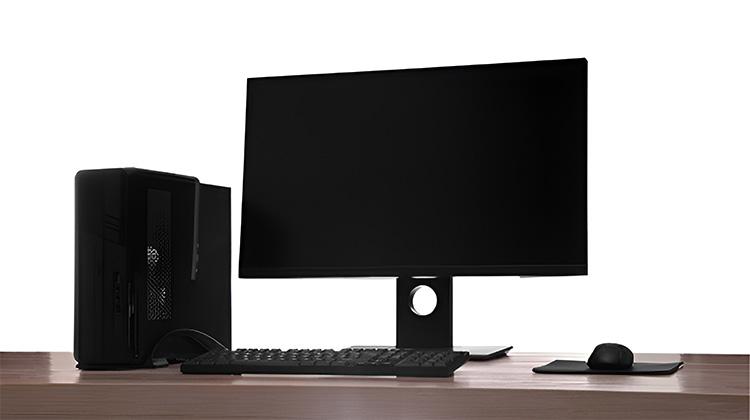
Have you ever hit the power button only to hear the computer’s fan running? The lights go on, and your hard drive sounds as if it’s functioning properly; however, your monitor remains black and shows absolutely nothing. The computer turns on but no display. That’s frustrating; however, you’re not the only one.
This issue can strike in a flash without notice. It can affect laptops and desktop computers equally. The issue is often a simple solution that you can try. This guide explains what to check when the computer turns on but no display. It covers software and hardware issues. Here are the troubleshooting steps to resolve the computer turns on but no display.
Common Causes of a Computer Turning On But No Display
Here are the most common reasons why your PC turns on but no display.
Loose or Disconnected Monitor Cables
This is the main reason the computer turns on but no display. The cable that connects the monitor and computer will loosen with time. The desk’s movement can cause cables to be pulled out slightly. Even a loose cable blocks the signal from getting to the screen. HDMI, VGA, DVI, and DisplayPort cables can all break easily. Kids or cleaning can take cables from the wall in a part. This can result in no display monitor.
Graphics Card Problems or Failures
The graphics card transmits an image signal directly to your display. A damaged graphics card will lose connection to the motherboard slot. The buildup of dust can also hinder effective contact over time. Graphics cards break down due to age or overheating, also. If a fan ceases to run, the card’s temperature rises and eventually fails. This results in no display on your PC, even though everything else appears normal.
Also read: Computer Screen Shadow Problem? 7 Instant Fixes to Solve It
RAM Memory Not Seated Properly
RAM sticks may break loose, particularly when the computer is moved. The computer is prevented from displaying a screen when it starts. Just one RAM stick loose results in a black screen at startup. Dust in RAM slots hinders the proper connection. Removing and re-inserting RAM frequently resolves the issue where the computer turns on but no display.
BIOS or CMOS Settings Issues
BIOS regulates how hardware begins at the basic level. Incorrect BIOS settings block any display on start-up. An unresponsive CMOS battery sets BIOS settings back to default. Incorrect display settings within BIOS prevent the display from working. Incorrect BIOS updates can leave your system in a faulty state. This causes your computer starts but no display.
Power Supply Not Providing Enough Power
A lack of power stops all components from operating properly. An insufficient power supply cannot power graphics cards. The computer will appear to be without a display even though it is. Power supplies may fail, with just a small portion of them powering certain components. Graphics cards require a lot of power and will always fail first.
How to Fix a Computer That Turns On But Has No Display
Utilize these troubleshooting steps to identify and fix computer turns on but no display issues.
1. First, Make Sure All Cables Are Connected
Start with the easiest and most likely to cause. Verify all cables when the monitor and computer are turned off. Check that the monitor’s power cord is connected to the outlet. Make sure the monitor has been switched on by pressing its button. Verify that you have the right connection secured at both ends. Connect the cable connectors with a firm push into the ports to make sure they lock.
Try rubbing the cables gently on the screen flickers. The screen is flickering due to a loose connection. Try disconnecting and reinstalling cables to ensure a stronger connection. Be sure that the adapters are connected and functioning correctly. An adapter that isn’t working correctly will result in no signal to the monitor.
2. Test with Another Monitor or Cable
This will tell you if the monitor or cable is damaged. Connect your computer to a different monitor. If the new screen is not showing, it’s an issue with the original monitor. Try switching to another cable or connection type. Try using HDMI rather than VGA to check this out. Cables are susceptible to breaking internally, even if they appear fine.
The computer turns on but no display on the second screen. When the external monitor works, the laptop screen needs repair.
3. Remove and Reseat RAM Modules
RAM issues are among the most common causes for the computer turns on but no display. Turn off the PC and disconnect the power cord. Unlock the case, and look for the RAM sticks within. Make sure to press both clips down on either side of the slots. It will appear in an incline. Take out the RAM and clean it of dust.
Clean the RAM contacts using a soft eraser to remove oxidation. Blow the RAM slots out with compressed air to eliminate dust. Insert the RAM again by pressing it to the side until the clips come back. Start by booting only one RAM stick.
4. Reseat or Test the Graphics Card
Problems with graphics cards cause a black screen on startup. Shut off the computer and disconnect the power cable before opening. Find the graphics card that is plugged into the slot on your motherboard. Remove the screw holding the bracket to the graphics card carefully. The release clip is pressed down and takes the card out. Examine the slot and card for dirt and then clean them thoroughly.
Remove the graphics card from the slot until the card clicks. Connect your monitor to the motherboard if there are graphics onboard. If the onboard graphics function, then you might require a new graphics card.
5. Reset BIOS to Default Settings
A BIOS issue can result in a no display error at boot. Restart the computer and press the Delete or F2 key. This will launch the BIOS configuration before Windows starts up. Search for an option that says “Load Default Settings” or “Reset to Default”. Choose it, then confirm the changes saved, then close the window to restart.
If you’re unable to access your BIOS, you must remove the CMOS battery. Let it sit for approximately five minutes and then reinsert. It resets the BIOS and helps resolve the computer turns on but no display.
Also read: Laptop Not Turning On? 10 Easy Troubleshooting Steps to Try
6. Check the Power Supply Is Working Properly
Insufficient power can cause the computer to be powered on, but there are no display issues. Be aware of clicking or buzzing coming from the power supply. These are indications of a malfunctioning device. Check that all power connectors are properly connected. Try testing with a different power supply with the same power level. A tester tool can help you identify computer display problems quickly.
7. Test Monitor on a Different Computer
This test will determine if the monitor is faulty. Connect your monitor to a working computer. If your monitor is working there, but the computer is the issue. If the computer turns on but no display, indicate that the monitor has failed. Make sure you are in warranty before purchasing the replacement monitor.
Conclusion
The computer turns on but no display issue. It’s difficult to resolve. However, it can be fixed. Test monitors, check cables, and swap out RAM first. The power supply and graphics card require more sophisticated troubleshooting. BIOS resets and hardware testing can help identify the issue computer turns on but no display.
FAQs: Computer Turns On But No Display
Why does my computer turns on but no display appears?
Your computer may turn on but show no display due to loose cables, faulty RAM, a damaged graphics card, or incorrect BIOS settings. Start by checking connections and reseating RAM.
Can RAM cause no display to monitor
Yes, improperly seated or faulty RAM is one of the most common reasons a PC turns on but no display appears. Reseating or replacing RAM often fixes the issue.
What should I check first if my computer turns on but no display?
First, check if your monitor is powered on and connected properly. Then verify the cable (HDMI/VGA) is secure. These basic checks solve most cases quickly.
How do I know if my motherboard is causing no display?
If you’ve tested RAM, GPU, PSU, and monitor and still get no display, the motherboard could be the issue. Also, beep codes can help identify this.









Leave a comment