






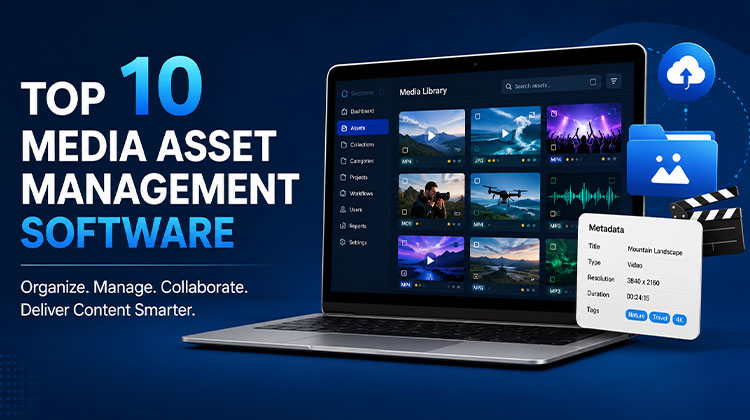
The way companies create or distribute content on the internet has dramatically changed over the past few years. With more types of media such as videos, 3D objects, and virtual and augmented reality content used across multiple channels and platforms, the need for central and efficient storage of media assets has never been more crucial. Media Asset Management Software (MAM) provides an all-in-one platform for storing, organizing, and providing access to all of your marketing materials, while ensuring brand consistency and security. Here are the 10 most popular MAM solutions based on features, functionality, and popularity.
Quick Comparison
| MAM Software | Ideal Use Case | Deployment | AI Capabilities | Integrations | MAM Focus |
|---|---|---|---|---|---|
| Dalet Galaxy five | Broadcast, news & media operations | Cloud / Hybrid | AI-supported | Extensive | ⭐⭐⭐⭐⭐ |
| Avid MediaCentral | Professional video production & broadcasting | Cloud / On-Premise | AI-supported | Extensive | ⭐⭐⭐⭐⭐ |
| EditShare FLOW | Post-production & video workflows | Cloud / On-Premise | AI-supported | Extensive | ⭐⭐⭐⭐⭐ |
| iconik | Distributed & remote media teams | Cloud / Hybrid | AI-powered | Extensive | ⭐⭐⭐⭐⭐ |
| CatDV | Media cataloging & archives | Cloud / On-Premise | AI-supported | Extensive | ⭐⭐⭐⭐⭐ |
| Cantemo Portal | Creative production & media workflows | Cloud / On-Premise | AI-supported | Extensive | ⭐⭐⭐⭐⭐ |
| Axle AI | Video production & media search | Cloud / On-Premise | AI-powered | Extensive | ⭐⭐⭐⭐⭐ |
| Cloudinary | Digital media management & delivery | Cloud | AI-powered | Extensive | ⭐⭐⭐⭐ |
| Vidispine | Enterprise media workflows | Cloud / Hybrid | AI-supported | Extensive | ⭐⭐⭐⭐⭐ |
| OpenText Media Management | Enterprise media & content management | Cloud / On-Premise | AI-supported | Extensive | ⭐⭐⭐⭐⭐ |
What Is Media Asset Management Software?
Media asset management software is designed to help organizations manage large collections of rich media such as video, audio, photographs, graphics, animations, and production files.
Unlike a traditional file-storage system, a MAM platform adds structure and intelligence around media. Teams can use metadata, search, permissions, workflows, previews, proxies, automation, and integrations to manage the entire lifecycle of a media asset.
A typical MAM workflow can include:
- Media ingestion
- Metadata management
- Asset organization
- Advanced search
- Video and audio preview
- Proxy generation
- Version management
- Review and approval
- Collaboration
- Workflow automation
- Archive and retrieval
- Rights and permissions management
- Publishing and distribution
The best media asset management software depends on the organization’s workflow. A broadcaster may need newsroom and production integrations, while a marketing team may prioritize collaboration, asset sharing, and distribution.
Why Do Businesses Need Media Asset Management Software?
As media libraries grow, finding the right file can become a significant operational problem. Files may be spread across local drives, NAS systems, cloud storage, production systems, and employee computers.
A modern media asset management software platform creates a searchable layer across these assets and helps teams maintain control over their media libraries.
Faster asset discovery
Metadata and intelligent search allow users to find specific files without manually browsing folders.
Better collaboration
Editors, producers, marketers, and other stakeholders can work with the same media library and share feedback without repeatedly exchanging large files.
Improved workflow efficiency
Automation can reduce repetitive tasks such as ingesting, tagging, transcoding, archiving, and publishing.
Stronger governance
Organizations can use permissions, metadata, versioning, and workflow controls to reduce the risk of using outdated or unauthorized media.
Easier media reuse
A well-organized library makes it easier to find existing footage and creative assets instead of recreating content unnecessarily.
Also read: Top 10 Campaign Management Software to Run Successful Campaign
10 Best Media Asset Management Software
Here are the leading platforms to consider when evaluating media asset management software in 2026.
1. Dalet Galaxy five
Dalet Galaxy Five is an enterprise media platform designed for broadcasters and media organizations with complex production and content workflows.
It is particularly relevant for organizations managing news, television, sports, and other professional media operations.
Key features
- Media asset management
- Content production workflows
- Newsroom integration
- Media planning
- Metadata management
- Workflow automation
- Collaboration
- Content distribution
- Archive management
Best for
Dalet Galaxy five is a strong option for broadcasters, news organizations, sports networks, and large media companies that need production workflows alongside media management.
2. Avid MediaCentral
Avid MediaCentral provides a media platform that supports professional production and media asset management workflows. Avid maintains dedicated MediaCentral Asset Management documentation and support resources, including current documentation for its Asset Management releases.
Its ecosystem is especially relevant to organizations already using Avid production technologies.
Key features
- Media asset management
- Content search
- Production workflows
- Metadata management
- Collaboration
- Media organization
- Workflow integration
- Professional video production support
Best for
Avid MediaCentral is well suited to broadcast organizations, production companies, newsrooms, and professional video teams.
For teams already operating within the Avid ecosystem, it can provide a more connected production environment than standalone storage.
3. EditShare FLOW
EditShare FLOW is a media management and workflow platform designed for professional video environments.
It helps production teams organize media, search content, manage workflows, and connect media storage with production operations.
Key features
- Media asset management
- Media search
- Metadata management
- Workflow automation
- Production collaboration
- Storage integration
- Archive workflows
- Video preview and management
Best for
EditShare FLOW is particularly suitable for post-production facilities, broadcasters, production companies, and organizations managing large video libraries.
Its strength is the connection between media management and professional production workflows.
4. iconik
iconik is a cloud-based media asset management platform designed for distributed teams and hybrid storage environments.
The platform describes itself as a full-scale MAM and supports media stored across on-premises infrastructure, cloud environments, and hybrid systems. It also provides AI-powered metadata capabilities, search, review, collaboration, automation, and publishing workflows.
Key features
- Cloud and hybrid MAM
- AI-powered metadata
- Advanced search
- Video and image management
- Review and approval
- Collaboration
- Automation
- API integrations
- Archive management
- Distributed storage support
Best for
iconik is a strong choice for creative agencies, production companies, global teams, and organizations with distributed media storage.
One of its major advantages is that organizations can connect existing storage without necessarily migrating all original media into a proprietary storage system.
5. CatDV
CatDV is a professional media asset management platform focused on cataloging, organizing, searching, and managing media throughout production and archive workflows.
It is particularly useful for teams with large collections of video and other production assets.
Key features
- Media cataloging
- Metadata management
- Advanced search
- Video preview
- Workflow automation
- Production integration
- Archive management
- Media lifecycle management
Best for
CatDV is suitable for broadcast companies, post-production facilities, production houses, archives, and organizations with extensive video libraries.
Its cataloging capabilities can be valuable when an organization needs to understand what is stored across a large media collection.
6. Cantemo Portal
Cantemo Portal is a media asset management platform designed for organizations that need to organize, search, and manage professional media.
The platform is well suited to media production environments where content needs to remain searchable and accessible throughout its lifecycle.
Key features
- Media asset management
- Metadata
- Search
- Media organization
- Workflow management
- Collaboration
- Integrations
- Archive support
Best for
Cantemo Portal is a good option for creative teams, broadcasters, production companies, and organizations managing professional media archives.
It can also fit organizations looking for a flexible MAM environment that integrates with existing production and storage infrastructure.
7. Axle AI
Axle AI is a media asset management platform focused heavily on video workflows. It is designed to help teams organize and access media stored on existing storage infrastructure.
Key features
- Video asset management
- AI-powered search
- Metadata
- Facial recognition
- Media indexing
- Browser-based access
- Proxy workflows
- Collaboration
- Existing storage integration
Best for
Axle AI is particularly attractive for video production teams, creative agencies, broadcasters, corporate video departments, and organizations that already have NAS or other storage infrastructure.
Its focus on video makes it a strong candidate when the primary requirement is managing large video libraries rather than general-purpose business documents.
8. Cloudinary
Cloudinary takes a somewhat different approach from traditional broadcast-oriented MAM platforms. Its platform combines media management with image and video transformation, optimization, delivery, and digital asset management.
Cloudinary currently describes Cloudinary Assets as a Digital Asset Management (DAM) product, while its broader platform provides image and video management, transformation, and delivery capabilities.
Key features
- Image and video management
- Digital asset management
- AI-powered metadata
- Search
- Asset transformations
- Video optimization
- APIs
- Media delivery
- Collaboration
- Workflow automation
Best for
Cloudinary is especially suitable for digital businesses, ecommerce companies, publishers, marketing teams, developers, and organizations that need to manage and deliver large volumes of visual content online.
Its API-first architecture makes it different from a traditional broadcast MAM. It is particularly powerful when media management and digital delivery need to work together.
9. Vidispine
Vidispine is an enterprise media technology platform focused on managing media content and building sophisticated media workflows.
It is particularly relevant for organizations that need scalable media infrastructure and integrations rather than a simple file-management application.
Key features
- Media asset management
- Metadata management
- Media indexing
- Search
- Workflow automation
- Media processing
- Storage integration
- APIs
- Archive management
- Content lifecycle management
Best for
Vidispine is well suited to media companies, broadcasters, OTT platforms, production organizations, and technology providers that require highly configurable media workflows.
Its API-driven approach can also be useful for organizations building customized media applications.
Also read: 5 Best Photo Editing Software in 2025 (Beginner to Pro Picks)
10. OpenText Media Management
OpenText Media Management is an enterprise platform for managing rich media and digital content across organizational environments.
It can help large organizations organize media, control access, manage metadata, and connect content with broader enterprise workflows.
Key features
- Media asset management
- Metadata management
- Search
- Digital asset organization
- Permissions
- Workflow management
- Content lifecycle management
- Enterprise integrations
- Archive capabilities
Best for
OpenText Media Management is a strong option for large enterprises, media organizations, marketing teams, and businesses that require enterprise-grade content governance.
Organizations already using the OpenText ecosystem may benefit from integrating media management with other enterprise content processes.
Conclusion
The choice of media asset management software ets is crucial for companies to effectively store, organize, and share a broad assortment of digital assets. Top 10 MAM solutions discussed in this article — Dalet Galaxy five, Avid MediaCentral, EditShare FLOW, iconik, CatDV, Cantemo Portal, Axle AI, Cloudinary, Vidispine, and OpenText Media Management– offer a variety of capabilities and options to satisfy the requirements of various companies.
FAQs: Media Asset Management Software
What is the difference between MAM and DAM?
MAM primarily focuses on rich media and production workflows, particularly video and audio. DAM has a broader focus on managing digital assets such as images, documents, logos, videos, and marketing content.
What features should I look for in MAM software?
Important features include advanced search, metadata management, AI-powered asset discovery, version control, workflow automation, permissions, collaboration, integrations, storage flexibility, and archiving.
Is MAM software suitable for small businesses?
Yes. Smaller production teams and creative businesses can use MAM platforms to organize growing media libraries, improve search, collaborate on content, and reduce duplicate files. The right choice depends on the team's media volume and workflow complexity.
Can MAM software manage video assets?
Yes. Video management is one of the primary uses of MAM software. Depending on the platform, capabilities can include video indexing, metadata, proxies, transcoding, search, review, workflow automation, and archiving.










Leave a comment